
UCP enables AI agents to complete purchases — but product data determines who gets considered.
In an agentic commerce model, clean and informative product data is the gatekeeper to visibility. If an AI agent can’t clearly understand what you sell, it won’t recommend or transact with you at all.
Why Retailers Need to Understand Google’s Universal Commerce Protocol
And why agentic commerce is changing how people discover and buy products
In early January 2026, Google announced something that could fundamentally reshape digital commerce — not through another advertising product or algorithm update, but through a technical protocol that quietly changes where and how transactions happen.
The Universal Commerce Protocol (UCP) is an open-source standard designed to allow AI agents to complete purchases on behalf of users, directly within conversational interfaces such as AI Mode in Google Search and Gemini. This shift isn’t about optimising product feeds or improving ad performance. It’s about enabling transactions to occur without users ever visiting a retailer’s website.
That change has profound implications for retailers, developers, and anyone building in eCommerce.
Universal Commerce Protocol should not be confused with Google’s Unified Commerce Platform, which focuses on how product data powers Search, Shopping, and Performance Max. Universal Commerce Protocol is about transactions, not discovery — specifically how AI agents complete checkout on a user’s behalf.
What UCP actually is (and isn’t)
At its core, UCP is infrastructure.
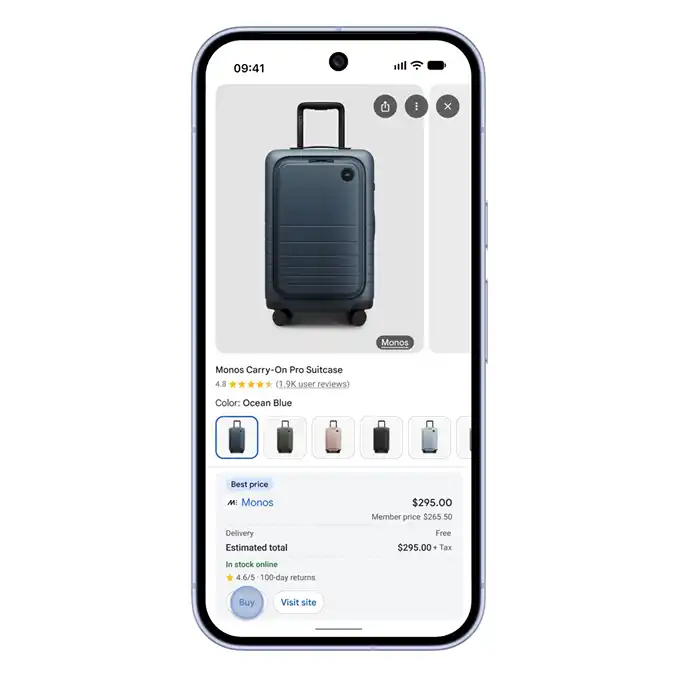
It’s a standardised protocol that allows AI agents to discover a merchant’s capabilities, initiate checkout flows, process payments, and manage post-purchase actions like order tracking or returns. It creates a common language for agent-to-merchant interactions, removing the need for bespoke integrations between every AI interface and every commerce backend.
UCP enables AI agents to:
- Discover what a merchant sells and how they transact
- Select products and initiate checkout
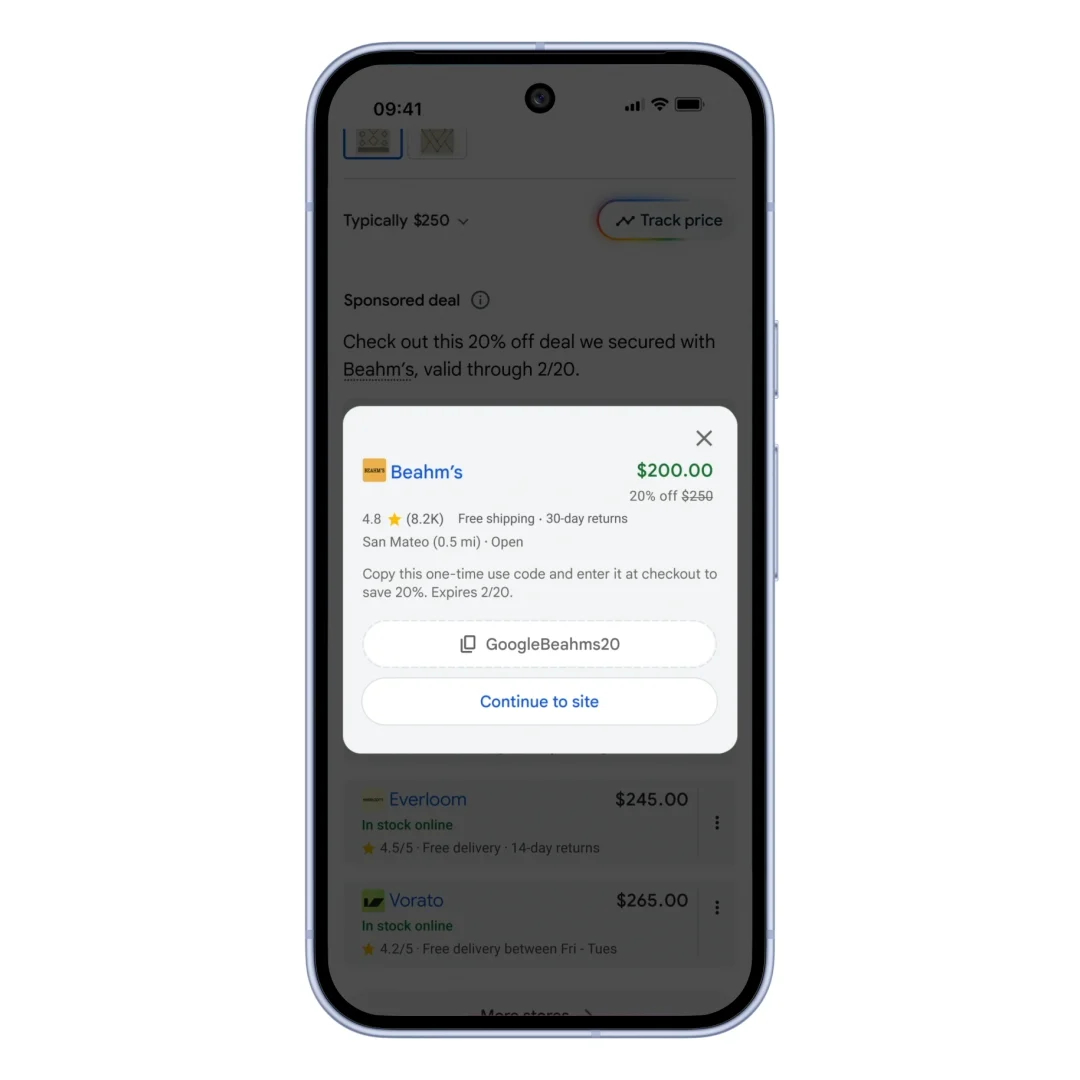
- Apply discounts or promotions
- Choose payment methods
- Complete purchases inside a conversational interface
What UCP is not is equally important.
It’s not a change to how Google processes product feeds.
It’s not an optimisation layer for Performance Max.
It’s not a ranking update.
And it’s not another metadata format added to existing listings.
UCP is infrastructure for a new shopping paradigm — one where AI agents discover products, negotiate terms, and complete purchases without redirecting users to a website.
How agentic commerce works in practice
Consider a simple example.
A user asks Gemini:
“Find me a waterproof hiking jacket under $200 with good reviews.”
Instead of returning search results or shopping ads, the AI agent:
- Discovers merchants integrated with UCP
- Queries their business capabilities and available inventory
- Presents options directly in the chat interface
- If the user chooses to buy, initiates checkout through UCP — applying discounts, selecting payment methods, and confirming the order without leaving the conversation
The merchant remains the merchant of record. They retain control over pricing, inventory, fulfilment, and customer data. The difference is that the transaction itself happens inside the AI interface, with UCP acting as the standardised bridge between the agent and the merchant’s backend systems.
Why clean product data becomes more important — not less
When users browse websites, unclear product pages can sometimes be forgiven. People scroll, skim, compare, and interpret. AI agents don’t do that.
Agents rely on explicit, structured product information to decide whether a product matches a request and whether a merchant can fulfil the intent with confidence. If that information is vague, inconsistent, or incomplete, the agent doesn’t try harder — it simply moves on.
In an agentic commerce model, product data becomes the primary decision surface.
Titles, attributes, descriptions, availability, pricing constraints, and policies are what allow an agent to reason about suitability. There is no visual browsing. No brand storytelling. No manual comparison. Only data.
This means clean, informative product data isn’t just about SEO or feeds anymore. It determines whether an AI agent:
- Understands what you sell
- Trusts that understanding
- Includes you as an option at all
UCP makes transactions possible.
Product data determines who gets the opportunity to transact.
“UCP makes transactions possible.
Product data determines who gets the opportunity to transact.”
Why Google built this — and who’s backing it
Google didn’t build UCP in isolation.
The protocol was co-developed with Shopify, Etsy, Wayfair, Target, and Walmart, and has endorsements from more than 20 major organisations across the commerce ecosystem. That list includes American Express, Visa, Mastercard, Stripe, Adyen, Best Buy, The Home Depot, Macy’s, and Zalando.
This level of industry participation matters. It signals that agentic commerce isn’t a Google experiment — it’s a structural shift that platforms, payment providers, and retailers are collectively betting on.
UCP is also designed to work alongside other emerging standards, including:
- Agent Payments Protocol (AP2) for secure, tokenised payments
- Agent2Agent (A2A) for communication between AI systems
- Model Context Protocol (MCP) for agent-to-business interactions
The goal is interoperability. UCP isn’t locked to Google’s ecosystem. Any AI platform can adopt it, which is precisely the point.
The opportunity — and the risk
The upside of UCP is access.
Retailers that integrate early gain visibility with high-intent shoppers directly inside AI-driven discovery experiences. But access alone isn’t enough. AI agents will prioritise merchants whose product data is clear, reliable, and easy to reason about.
The risk is quieter but more serious: invisibility.
If agentic commerce becomes a primary discovery and transaction channel, retailers that lack either UCP integration or clean product data won’t be penalised. They simply won’t appear.
A final thought
Agentic commerce isn’t theoretical. It’s launching now.
Universal Commerce Protocol is Google’s — and Shopify’s, and Walmart’s, and others’ — answer to a fundamental question: how does commerce work when AI agents handle discovery, comparison, and purchase decisions on behalf of users?
For retailers, the real preparation isn’t just technical integration. It’s ensuring that when an agent looks at your catalog, it can clearly understand what you sell and confidently choose you as an option.
The shift isn’t about pleasing Google.
It’s about being legible to the systems that increasingly make buying decisions for people.
Key takeaway for retailers:
“As commerce shifts into AI-driven interfaces, product data becomes the primary decision signal. UCP enables checkout, but clean, structured product information determines whether an AI agent ever surfaces a retailer as an option.”